

Good News for Human Creators

Good News for Human Creators.
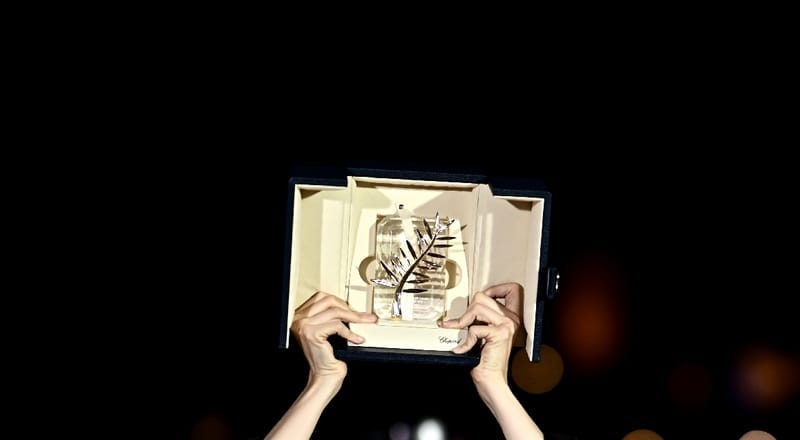
The Cannes Film Festival happens next week. Film executives from around the world will gather on the Croisette to celebrate cinema, close deals, and proclaim, with genuine conviction, the irreplaceable nature of human creativity. They will do everything in their power to beat back the tide of AI.
A month later, the Cannes Lions advertising festival will take place in the same city. Ad executives from around the world will arrive in its place, licking their chops, trying to anticipate the value that will be unlocked when AI-produced content drives the cost of creative production toward zero.
Same city, same hotels. Completely opposite worldviews.
The contrast could hardly be more stark. Both sides are looking at the same phenomenon from opposite ends, but the film executives are closer to the truth.
The Creation Fallacy: What Users Actually Made
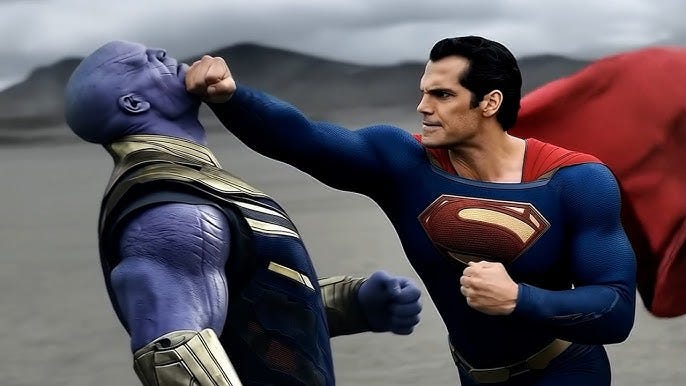
When consumers got access to Sora and began generating content with studio IP, licensed or not, the output was not bold new storytelling or subversive reinterpretation. What poured out was an endless cascade of hypothetical fight changes. Superman versus Thanos (above). Goku versus the Hulk. Batman versus Wolverine. Character A from Universe X inserted into a confrontation with Character B from Universe Y. According to data cited in recent U.S. Senate Judiciary Committee hearings (Welch-Blackburn, March 2026), these clips, specifically Superman vs. Thanos, racked up millions of views instantly.
This is not a failure of the tool; it’s rather about the user. Given access to the entire imaginative universe of human IP and a generative engine powerful enough to render it, the median consumer did not reach for poetry or invention but gravitated to the lowest friction template available: the “who would win” question that has been the lowest common denominator of fan discourse since the first comic book crossover.
Marc Andreessen had predicted on the a16z Podcast that AI would give rise to “the filmmaker with no visual skill, or access to a set, or to a camera, or to actors, but with an idea.” Sam Altman called it an opportunity for “interactive fan fiction.” The language was borrowed from an earlier generation of tech utopianism: when Facebook launched, Zuckerberg said it would connect the world; Twitter would democratize speech; YouTube would give everyone a global stage. In each case, the opening vision was genuine and wrong, not about the technology but about the human beings on the other end of it.
Frictionless tools don’t create creators. They create a mountain of noise. Most users do not want to “create” content. They want to belong to a cultural conversation already in progress. The content that emerged from Sora wasn’t dangerous enough to constitute a brand catastrophe for Disney. It was something in many ways worse: it was boring.
Maybe the real business model is just to make better Star Wars movies?
The Deal That Proved It
On December 11, 2025, Disney and OpenAI announced a three-year licensing agreement covering more than 200 characters from Disney, Marvel, Pixar, and Star Wars, alongside a $1 billion Disney equity investment in OpenAI. Bob Iger called it a new era of storytelling. Sam Altman called Disney the global gold standard.
It was a press release more than an operating agreement. The governance framework was never built. The moderation pipeline, the legal questions around training versus output, and the revenue attribution model were all deferred to a future negotiation that never happened. The WGA contract was set to expire May 1, 2026, right when Sora content was supposed to go live, meaning the entire labor negotiation season would have coincided with fan-generated AI content streaming on Disney+.
None of it mattered. OpenAI shut down Sora in March 2026, reportedly giving Disney as little as 30 minutes’ notice before the public announcement. Disney’s $1 billion never moved. Their parting statement, that they “appreciated what we learned from it,” was probably the most honest line in the whole saga.
The press focused on compute costs. Sora was burning upwards of $15M per day while generating a fraction of that in revenue. Perhaps a more interesting question is whether OpenAI ever intended to fully ship. By getting Disney’s imprimatur, OpenAI established its licensing model as the responsible industry benchmark, making it highly damaging for Midjourney and other competitors being sued for training without licenses. The deal may have accomplished its most important strategic goal without ever needing to deliver a product.
Instagram’s Antibodies
Clipping is a phenomenon that emerged independently, a grassroots behavior driven by fans wanting to share the twelve seconds of a film that captured something true. Movie marketers noticed it happening and tried to amplify it through structured Creative Kits. Then the economics arrived and ruined everything.
Platforms sprang up offering bounties for views on clipped content, paying out on volume, indifferent to quality. AI immediately rushed into the niche. The incentive structure was perfectly designed for automation: low creative threshold, measurable output, and direct financial reward per view. Human clippers who had been doing it for love of the material were outcompeted by algorithmic channels producing hundreds of clips a day at near-zero cost. The marketers who had tried to harness organic fan behavior had inadvertently built the economic on-ramp for its replacement. The community-generated content became a sea of redundant synthetic output.
In April 2026, Instagram significantly expanded its algorithm to penalize unoriginal content, not just in Reels, but across photos and carousels. This was not Instagram taking a principled stand on behalf of human creators. This was a business decision driven by the need to protect the ad inventory. When synthetic content floods a feed, engagement drops. When engagement drops, the value of the view degrades, and the advertiser pays less. Math.
Adam Mosseri, the head of Instagram, framed it in the language of creativity, which is how platforms always frame self-interested algorithm changes:
“When meme creators add humor, social commentary, cultural references, or a relatable take, they’re producing something original. The best creators take third-party content and make it unmistakably theirs.”
It sounds like a statement about values. It is a revenue protection strategy.
The mechanism was simple. When users encounter the same AI-clipped segment too many times, the behavioral signal is churn, and platforms that monetize attention cannot survive indifference to that signal. Gen Z and Gen Alpha treat synthetic slop as a signal to exit. And AI aggregators hack the discovery algorithm by mass-producing variations of what used to perform, creating a hall-of-mirrors effect that breaks the platform’s novelty detection entirely.
Original creators build communities. AI clipping channels builds noise. Communities are what advertisers pay to access.
The Same Wall
Sora tried to eliminate the barrier to creation. The bounty platforms tried to eliminate the barrier to distribution. In both cases, the operating assumption was identical: remove the friction, unlock the value. In both cases, the actual result was identical: removing the friction surfaced latent noise, not latent creativity. And noise, at scale, doesn’t just fail to create value. It actively destroys the value of the signal it was supposed to amplify.
Underneath both stories is the same misalignment between capital and consumers. The investor thesis is that AI drives the cost of content creation toward zero and margin expands. The Gen Z and Alpha reality is the opposite. Gen Z and Gen Alpha are simultaneously the most AI-literate and the most AI-resistant generations in history. They don’t just dislike AI content; worse for brands, they distrust the people who produce it.
Obie Fernandez, the influential technologist and author of The Rails Way, has championed the Aesthetic of Effort to describe the “Human Premium,” the idea that in an era of effortless AI generation, we are hardwired to value the visible intentionality and proof of labor that only human craft provides. Gen Z and Alpha are reclaiming the Aesthetic of Effort as a seawall against the tsunami of automated marketing. The race to zero on production cost is simultaneously a race to zero on perceived value. When the cost of noise drops to zero, the premium for signal skyrockets. Just as a mechanical watch is a hundred times more valuable than a digital one, human-created content is becoming a luxury category.
The winning version of generative video will not be an unlimited creative instrument for consumers, but tools that make complex human vision cheaper to execute, not tools that attempt to replace the vision itself. The auteur model does not die in this future. It gets leverage.
The Road Back to the Screen
Hollywood has already lost the attention war against short-form video platforms. The question now is not how to resist them but how to enlist them into this new economy of human curation. Strip away the algorithms and AI, and what actually moves culture is embarrassingly simple: a person shares something because it made them feel something, and another person feels it too.
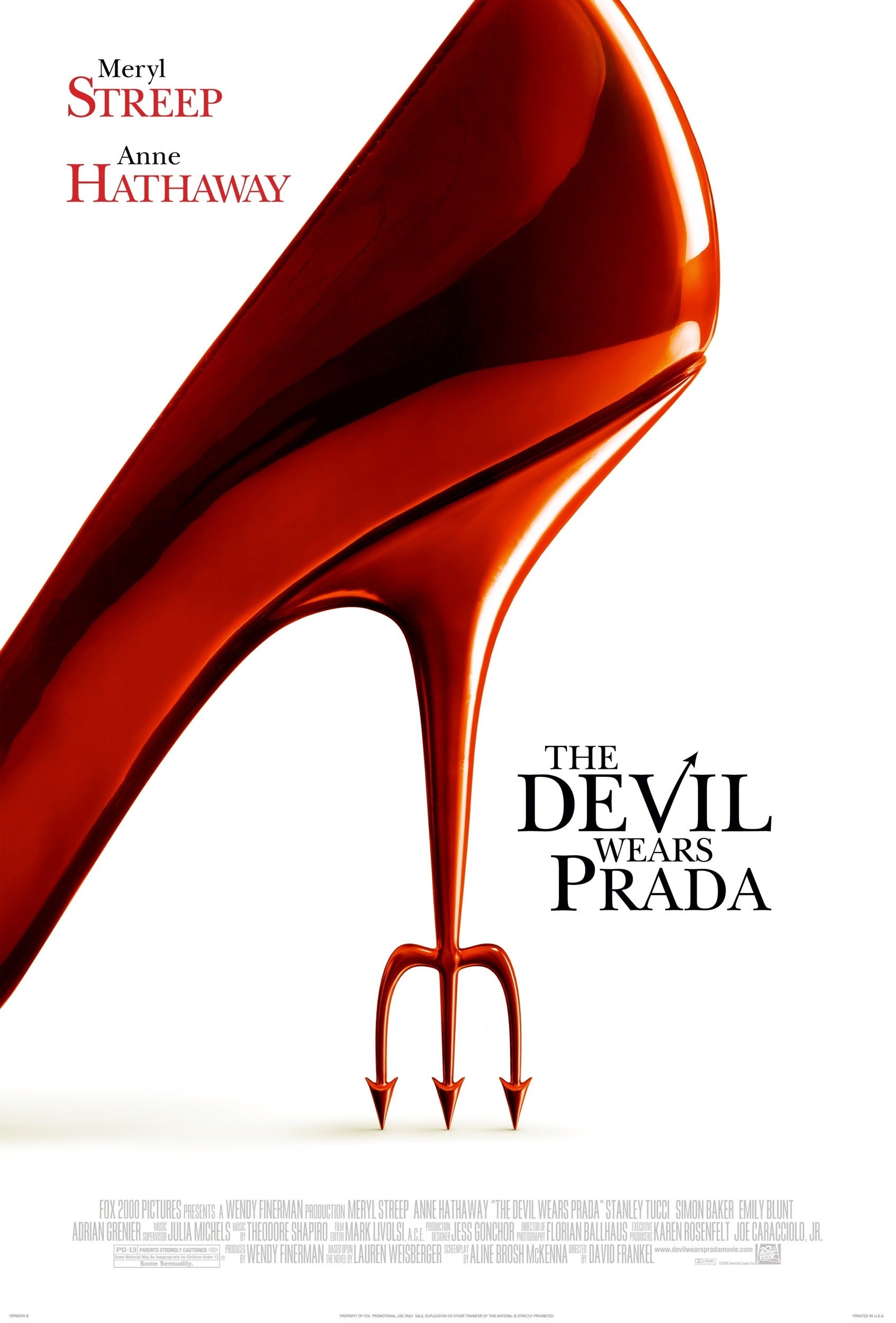
The Devil Wears Prada, a 2006 film, found an entirely new generation of fans through TikTok memes built around scenes they had never seen in a cinema. “That’s all” became cultural shorthand. Miranda Priestly became a Gen Z archetype. The cerulean speech became a text that young people quoted with fluency, not necessarily because they watched the movie (many probably didn’t), but because the movie lived in their feed long enough that the distinction stopped mattering. No studio engineered that. No Creative Kit was deployed. A new primary audience emerged that then streamed it, consumed the cast reunion content, and met the sequel announcement with genuine emotional investment.
This is the alternative to the top-down, nostalgic impulses that drive too many studio greenlight decisions: the executive who champions an expensive revival because the property meant something to him or her personally at fourteen. Rather than imposing a legacy brand onto the audience, studios should be watching where the audience has spontaneously regenerated life around existing IP. When young audiences independently remix The Devil Wears Prada into “Office Core” aesthetic trends or career-focused TikTok discourse, they are providing human validation that no focus group can replicate. That is not nostalgia. That is a living franchise. The most valuable signal is not a brand’s history but its current capacity to evolve into a living cultural conversation.
TikTok and Instagram should not be seen as monetization platforms for Hollywood IP. They are relationship platforms. The actual monetization event for Hollywood is downstream. It is the movie ticket sold to someone whose algorithm served them a clip that made them feel something. It is the streaming subscription retained because a show stayed culturally alive between seasons. It is the merchandise purchased because a character became a presence in someone’s daily scroll.
The studios that learn to steer will find that the platforms’ algorithmic self-interest aligns with theirs. The platforms need the Human Premium to protect their ad moat. Hollywood needs the platforms to maintain cultural relevance. That is a partnership waiting to be structured, not a war needing to be won.
Conclusion
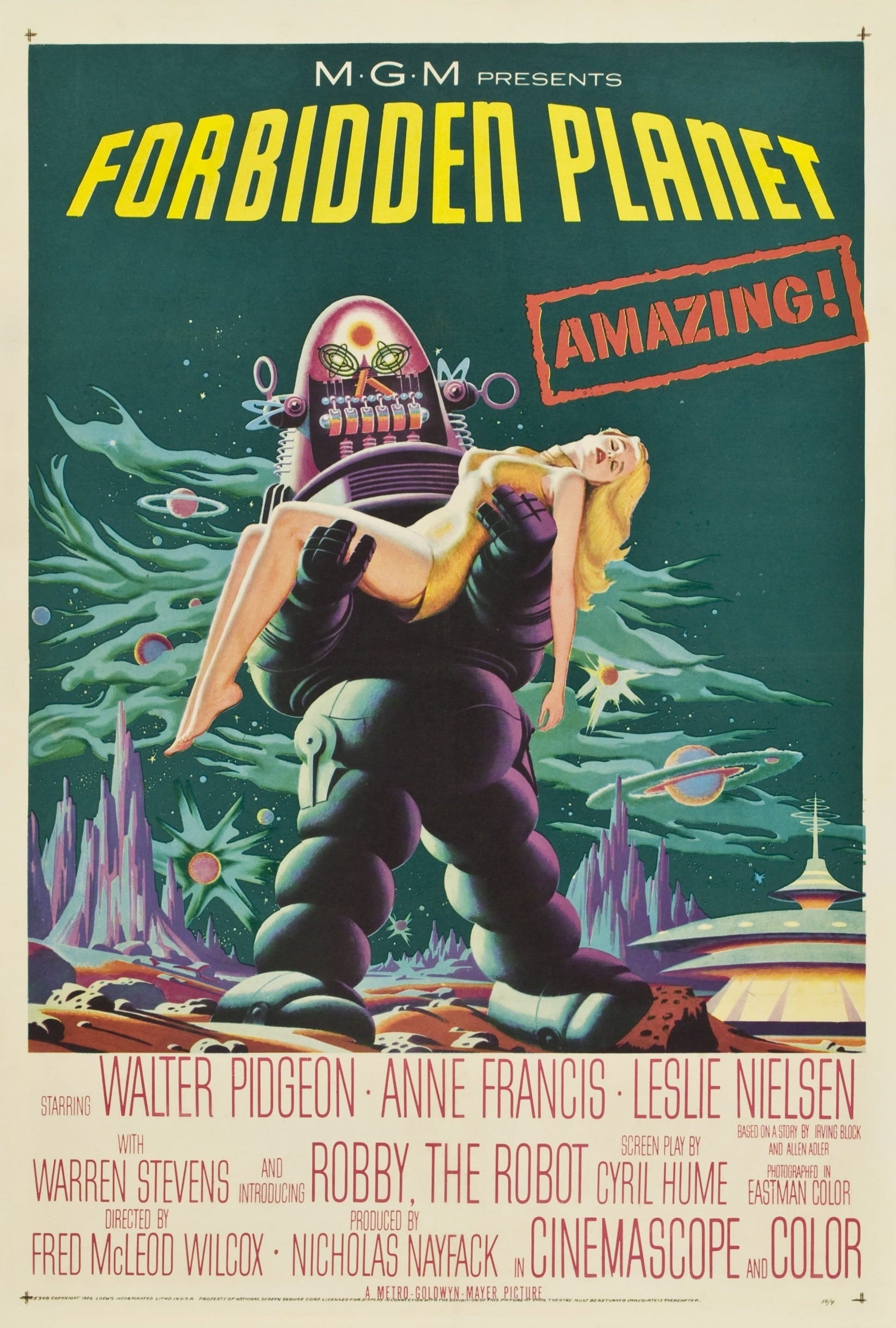
Hollywood’s opportunity, and it is a real one, not a consolation prize, is to understand that the scroll and the screen are not in competition. They are complementary. The scroll is where relationships with IP are deepened, sustained, and sometimes even formed between theatrical moments and streaming consumption, where those relationships can ultimately be monetized.
This all reminds me of one of my favorite films, Forbidden Planet. In that story, giving too much compute power to too many people destroys an entire civilization because they forgot about the monsters from the id. Something similar is happening now. By removing the friction of craft, we haven’t unleashed our genius. We have automated our laziest ideas, drowning the world in a synthetic fog that makes it harder to think, feel, or see anything real.
The future is not that AI makes everything cheaper. The future is the reassertion of the Auteur, where the tools are invisible, the economics are more sustainable, and the vision is irreplaceable.
Written by David Larkin